
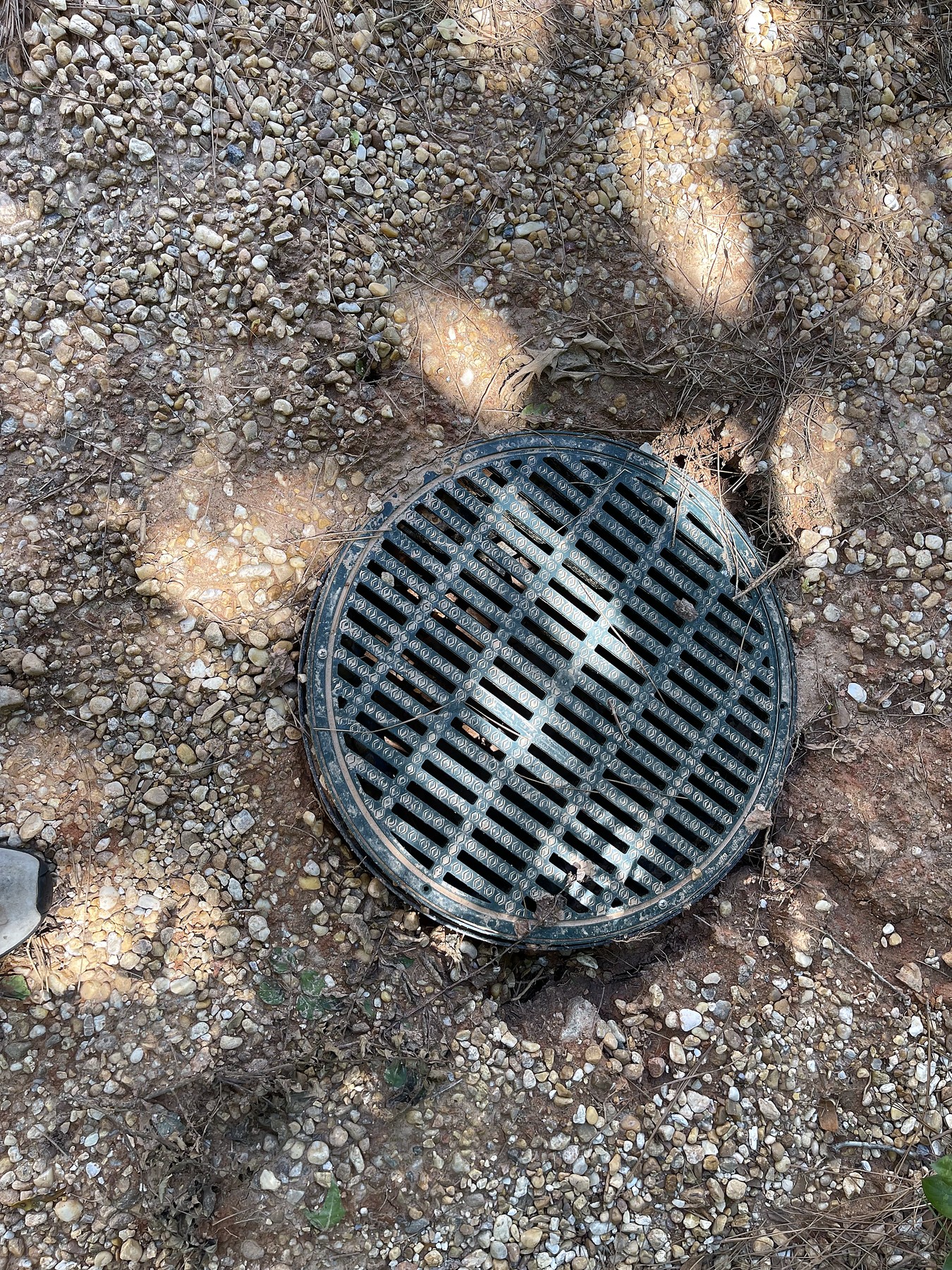
Ask anyone who’s tried to dig a hole in North Atlanta and they’ll tell you about the red clay. It’s dense, it’s heavy, and — the part that matters for your yard — it drains water very, very slowly.
The soil is the whole problem
Sandy soil lets rain percolate straight down. Georgia’s clay does the opposite: water hits it and sits on top, because the tightly packed particles leave almost no room for it to move through. So a rain that would soak into a sandy yard in minutes will pond on a clay yard for hours or days.
That’s why drainage problems here aren’t really a “too much rain” problem — they’re a soil problem. The water has nowhere to go, so it collects in low spots, along foundations, and at the bottom of slopes.
What clay does to a yard over time
- Standing water that drowns grass roots and grows moss and mosquitoes
- Runoff that carves channels and washes out mulch and topsoil
- Saturated soil against the foundation, which expands, shifts, and cracks structures over repeated wet-dry cycles
What actually fixes it
You can’t change the clay, so good drainage gives the water a faster path than the soil ever will:
- Catch basins to swallow surface water at the low point
- French drains to intercept and carry subsurface water to daylight
- River-rock beds and surface drains for downspouts and runoff paths
Every fix starts with a free on-site assessment — we read the grade and find where your water actually travels. Yard drainage runs about $65 per linear foot; see the pricing page.
If you already have pooling against the house, don’t wait — read Standing Water in Your Yard? for why it’s a foundation issue, not just a lawn one.