
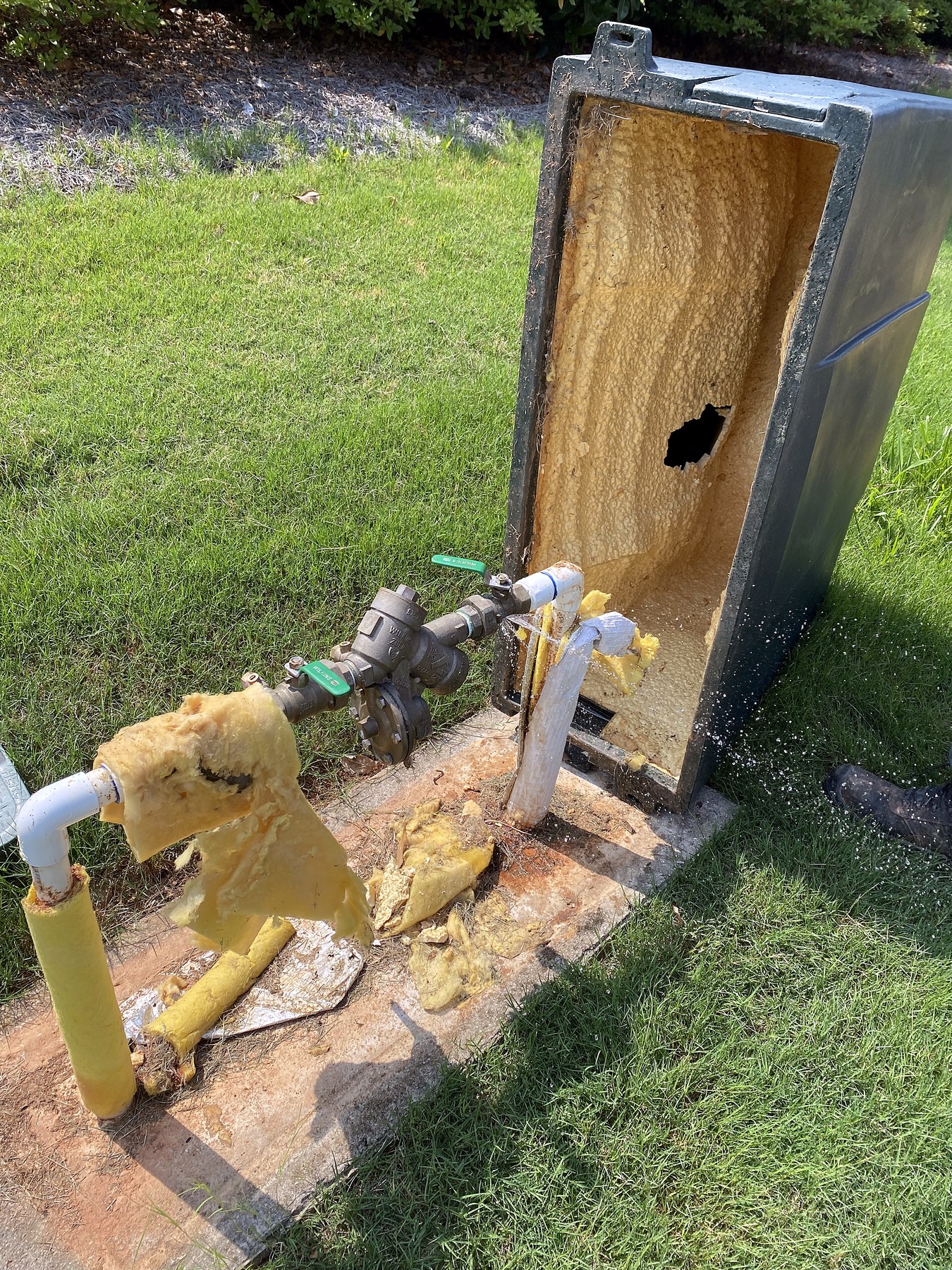
People assume winterizing sprinklers is a “cold-climate” thing. In North Atlanta it absolutely is not — we see just enough hard freezes each winter to crack pipes and backflow assemblies, and because they’re rare, most homeowners get caught off guard.
When to do it
The target window in North Atlanta is late November into early December, before the first sustained hard freeze. You don’t need to wait for a Minnesota-style deep freeze — a single night in the low 20s is enough to freeze water in an above-ground backflow assembly and split the brass.
What winterization actually covers
- Shutting off and isolating the irrigation water supply
- Draining water from the lines, valves, and the backflow assembly
- Insulating the backflow and any exposed above-ground components
- A quick check of the controller’s off-season settings
The most vulnerable part is the backflow preventer — it sits above ground, holds water, and takes the cold directly. That’s the part a freeze cracks first. (More on that device in What Is a Backflow Preventer.)
Why it’s worth it
Winterization runs $95–$120. A backflow assembly cracked by a freeze can run several hundred dollars to replace, plus the water damage from a line that lets go while you’re not watching. It is one of the clearest prevention-beats-repair calls in this whole trade.
Book winterization before the first hard freeze — see timing and pricing on our pricing page, and when spring comes back around, we’ll handle the spring activation too.