
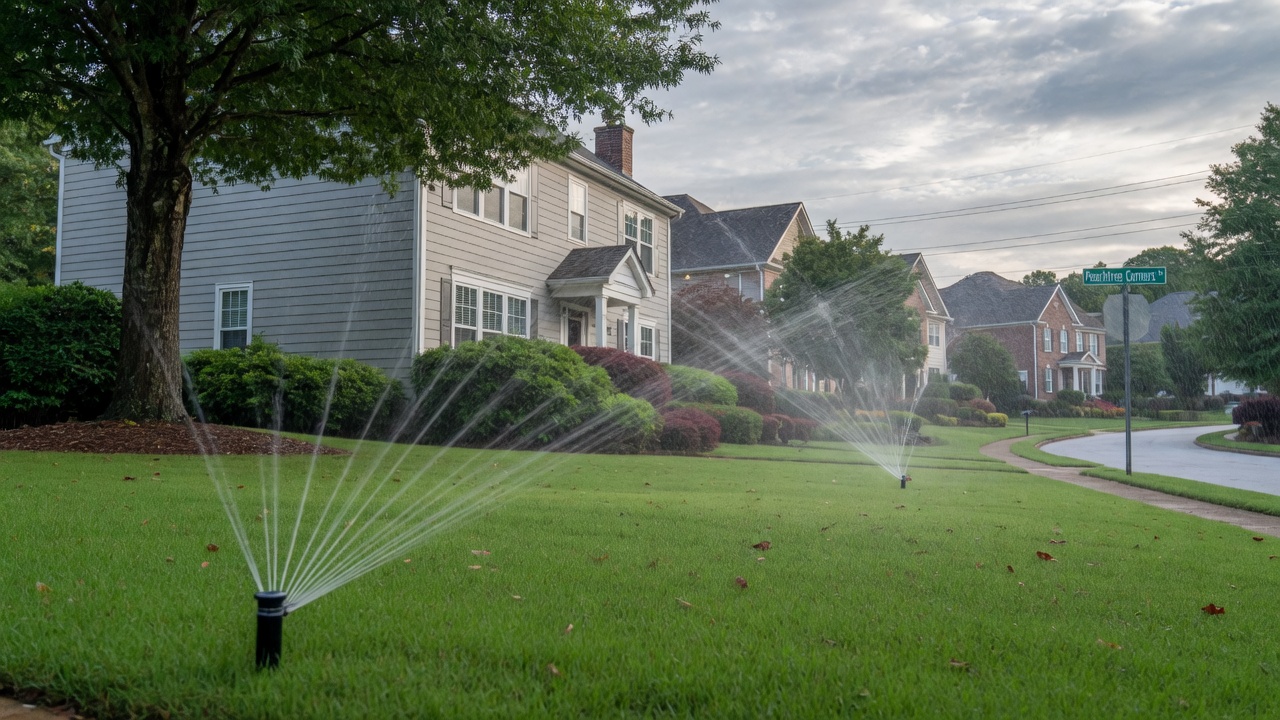
Here’s the mistake we see most often on older systems: the hydrangeas, the salvia, and the front lawn are all on one zone, running the same minutes on the same days. The result is predictable — either the lawn is fine and the beds are stressed, or the beds are happy and the turf is soggy. Grass and garden plants simply don’t want the same water, and the fix is to stop making them share.
Turf and beds have different thirst
A lawn wants relatively frequent, even, shallow-to-medium watering across a wide flat area. A planting bed is a mix of shrubs and perennials with deeper roots that prefer a slower, deeper soak less often. Force them onto one schedule and you’re compromising both:
- Beds on a lawn schedule get shallow, frequent water that encourages weak surface roots and invites fungus on the leaves.
- Lawn on a bed schedule gets long infrequent soaks that leave the turf dry between cycles.
In North Atlanta’s clay soil, which holds water and drains slowly, that mismatch shows up fast as root rot in the beds or thin patches in the lawn.
What proper zoning changes
When we improve a system, one of the first things we look at is whether the beds have their own zone. Giving them one lets us:
- Match the emitter to the plant. Beds often do best on drip or micro-spray that puts water at the soil, not on the foliage — better for the plant and for water use.
- Set the right frequency. Beds can run deep and less often; the lawn keeps its own cadence.
- Water without wetting the leaves. Keeping foliage dry cuts down on the leaf spot and mildew that plague overhead-watered beds in a humid Georgia summer.
On the property in the photo above, the curved bed of salvia and the hydrangea got moved onto their own zone with heads matched to what’s planted there. The lawn kept its schedule; the plants got theirs. Everything looks better because nothing is fighting over the same valve.
Matched precipitation matters too
Even within the lawn, heads should be “matched precipitation” — meaning a rotor covering a big arc and a spray head covering a small corner put down water at the same rate. Mix mismatched heads on one zone and parts of the yard flood while others stay dry. Getting this right is quiet, unglamorous work, but it’s the difference between an even landscape and a patchy one.
Common questions
Can beds be added to an existing system? Often yes — we can split a zone or add a valve to give beds their own schedule without redoing everything.
Is drip better than spray for beds? For most shrubs and perennials, yes — it’s more efficient and keeps foliage dry. Some annual color beds do fine on low micro-spray.
Will this save water? Usually. Watering each area only as much as it needs, at the root, wastes far less than one blanket schedule.
If your beds and your lawn are stuck sharing a zone, that’s worth fixing before peak summer. Get a free estimate and we’ll map out what your landscape actually needs.